

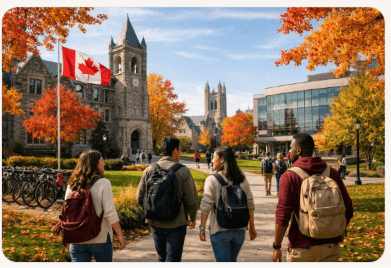
Canada continues to be one of the most popular destinations for international students because of its high-quality education, welcoming communities, and excellent career opportunities. Every year, thousands of students choose Canadian colleges and universities to pursue undergraduate, postgraduate, diploma, and research programs.
If you plan to study in Canada for more than six months, you will generally need a Canada Study Permit before beginning your academic journey.
This guide explains the Canada Study Permit application process for 2026 in simple, easy-to-understand language. You'll learn about eligibility, required documents, Provincial Attestation Letters (PAL), financial requirements, biometrics, processing times, and practical tips to prepare a strong application.
What is a Canada Study Permit?
A Canada Study Permit is an official document issued by Immigration, Refugees and Citizenship Canada (IRCC) that allows eligible international students to study at a Designated Learning Institution (DLI) in Canada.
A Study Permit is not the same as a visa. Depending on your nationality, you may also receive either:
- a Temporary Resident Visa (TRV), or
- an Electronic Travel Authorization (eTA),
which allows you to travel to Canada. Full details are on the official IRCC Study Permit page.
Who Needs a Canada Study Permit?
Generally, you need a Study Permit if:
- You are an international student.
- Your program is longer than six months.
- You have received an acceptance letter from a Designated Learning Institution (DLI).
- You meet Canada's immigration requirements.
Eligibility Requirements
Applicants should generally:
- Hold a valid passport.
- Receive an acceptance letter from a DLI.
- Show sufficient financial support.
- Demonstrate genuine study intentions.
- Be in good health (if a medical exam is required).
- Have no serious criminal record.
Required Documents
Prepare the following documents:
- Valid passport
- Acceptance Letter
- Provincial Attestation Letter (if applicable)
- Passport-size photograph
- Financial documents
- Bank statements
- Scholarship letter (if applicable)
- Academic transcripts
- Degree certificates
- Language test results (IELTS, TOEFL, PTE, etc., if required)
- Statement of Purpose (SOP)
- Medical examination results (if required)
- Biometrics confirmation
Verify your institution is on the official Designated Learning Institutions (DLI) list before applying.
What is a Provincial Attestation Letter (PAL)?
For many study permit applicants, Canada now requires a Provincial Attestation Letter (PAL) issued by the province or territory where the Designated Learning Institution is located.
The PAL confirms that your institution has been allocated a study permit spot under Canada's current international student policies. Check with your institution to determine whether a PAL applies to your program and application.
Financial Requirements
Applicants should generally demonstrate enough funds to cover:
- Tuition Fees
- Living Expenses
- Accommodation
- Transportation
- Return Travel
- Other personal expenses
Financial proof may include:
- Bank Statements
- Sponsor Documents
- Scholarship Letter
- Education Loan Approval
- Guaranteed Investment Certificate (GIC), if applicable
See our guide on how to get a fully funded scholarship to help finance your studies in Canada.
Biometrics
Many applicants are required to provide:
- Fingerprints
- Digital Photograph
Biometrics are usually collected at an authorized Visa Application Centre (VAC).
Medical Examination
Some applicants must complete an immigration medical examination conducted by an approved panel physician, depending on their country of residence, travel history, or intended field of study.
Step-by-Step Canada Study Permit Application
Step 1: Receive DLI Admission
Receive admission from a Designated Learning Institution (DLI). If your grades are below average, read our Study in Canada with Low CGPA guide for alternative pathways.
Step 2: Obtain Acceptance Letter and PAL
Obtain your acceptance letter and any required Provincial Attestation Letter (PAL).
Step 3: Prepare Supporting Documents
Gather financial proof, academic records, and a strong statement of purpose (SOP) and motivation letter.
Step 4: Create an IRCC Account
Create an online account through the IRCC Secure Account portal.
Step 5: Complete the Application
Fill out the Study Permit application form accurately.
Step 6: Upload Documents
Upload all required documents in the formats specified by IRCC.
Step 7: Pay Application Fees
Pay the required study permit and biometrics fees.
Step 8: Submit Biometrics
Provide biometrics if requested by IRCC.
Step 9: Complete Medical Exam
Complete a medical examination if required for your application.
Step 10: Wait for Decision
Monitor your IRCC account for updates on your application status.
Step 11: Prepare for Travel
If approved, receive your Port of Entry Letter of Introduction and prepare for travel to Canada.
Processing Time
Processing times vary depending on your country of residence, application volume, and completeness of your submission. Apply as early as possible before your program start date.
Working While Studying
Eligible international students may be able to work during their studies if they meet the conditions of their study permit. Work eligibility and permitted hours are subject to current IRCC regulations, so always verify the latest rules before accepting employment.
Extending Your Study Permit
If you continue your education beyond your current permit's validity, you should apply to extend your Study Permit before it expires, following IRCC guidance.
Common Reasons for Refusal
Applications may be refused for reasons such as:
- Incomplete documentation
- Insufficient financial proof
- Weak study plan
- Unclear purpose of study
- Failure to meet immigration requirements
- Missing or incorrect information
A well-structured scholarship essay can help you articulate your study goals clearly in your SOP.
Frequently Asked Questions
Is a Study Permit the same as a Student Visa?
No. A Study Permit authorizes you to study in Canada, while a Temporary Resident Visa (TRV) or Electronic Travel Authorization (eTA) may be required to enter the country.
Can I work while studying?
Many students can work if they meet the conditions of their permit. Check the latest IRCC rules for details.
Do I need a Provincial Attestation Letter?
Some applicants do, depending on current policies and their institution. Confirm with your school before applying.
Can I extend my Study Permit?
Yes, if you remain eligible and apply before your current permit expires.
Final Thoughts
Canada offers world-class education and excellent opportunities for international students. By preparing your documents carefully, understanding the application requirements, and following official guidance from IRCC, you can improve your chances of obtaining a Study Permit successfully.
Apply early, stay organized, and rely on official Canadian government resources for the most up-to-date information.