

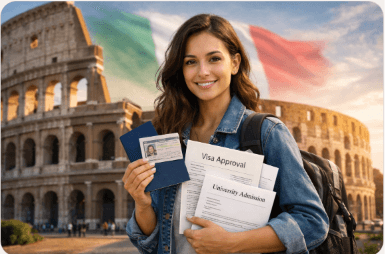
Planning to study in Italy in 2026? Whether you have secured admission to an Italian university or are preparing your application, obtaining a student visa is one of the most important steps before beginning your academic journey.
Italy is one of Europe's most popular destinations for international students. Its world-renowned universities, affordable tuition fees, rich cultural heritage, and excellent scholarship opportunities attract thousands of students every year. If you are a non-European Union (EU) citizen, you will generally need an Italy Student Visa before you can travel and begin your studies.
This guide explains the Italy Student Visa application process in simple language. You will learn about eligibility requirements, required documents, visa fees, processing time, financial proof, health insurance, and common mistakes to avoid.
What is an Italy Student Visa?
An Italy Student Visa allows international students to enter Italy for educational purposes. If your study program lasts longer than 90 days, you will generally need a National Visa (Type D). After arriving in Italy, you must also apply for a residence permit (Permesso di Soggiorno) within the required timeframe.
For official guidance, see the Italian Ministry of Foreign Affairs — Studying in Italy (English).
Who Needs an Italy Student Visa?
You will typically need a student visa if:
- You are a non-EU/EEA citizen.
- You have received an official admission letter from an Italian university or institution.
- Your course lasts more than 90 days.
- You meet the financial and documentation requirements.
Students from some countries may have different visa requirements, so always check the Italian embassy or consulate serving your country.
Types of Italy Student Visas
Type C Visa (Short Stay)
- For courses lasting less than 90 days.
- Suitable for language courses, summer schools, or short academic programs.
Type D Visa (Long Stay)
- Required for bachelor's, master's, PhD, and long-term exchange programs.
- Valid for study programs exceeding 90 days.
Italy Student Visa Eligibility Requirements
Before applying, make sure you meet these conditions:
- Valid passport with sufficient validity.
- Official admission letter from an Italian institution.
- Proof of accommodation in Italy.
- Evidence of financial support.
- Valid health insurance.
- Completed visa application form.
- Passport-sized photographs.
- Payment of the visa application fee.
Documents Required
Prepare the following documents:
- Valid passport.
- Completed visa application form.
- Recent passport-size photographs.
- University admission letter.
- Tuition fee payment receipt (if applicable).
- Proof of accommodation.
- Flight reservation (if required by your embassy).
- Bank statements or scholarship award letter.
- Health insurance covering your stay.
- Academic transcripts and certificates.
- Proof of language proficiency if requested.
Always verify the exact document checklist with the Italian embassy or consulate in your country, as requirements may vary. The Italian Ministry FAQ (Italian) is a helpful reference.
Step-by-Step Italy Student Visa Application Process
Step 1: Receive Your Admission Letter
Apply to an Italian university and wait for your official acceptance letter. If you need funding, read our guide on how to get a fully funded scholarship.
Step 2: Gather Your Documents
Collect all required documents and make sure they are complete and up to date. Strong supporting documents — including a motivation letter for scholarship or admission — can strengthen your profile.
Step 3: Complete the Visa Application Form
Fill out the student visa application form carefully. Double-check your personal information to avoid delays.
Step 4: Book a Visa Appointment
Schedule an appointment with the Italian embassy, consulate, or authorized visa application center in your country.
Step 5: Attend Your Appointment
Bring all original documents and copies. During your appointment, you may also be asked questions about your study plans, finances, and accommodation.
Step 6: Pay the Visa Fee
Pay the applicable visa fee according to the embassy's instructions and keep the receipt for your records.
Step 7: Wait for Processing
Visa processing times can vary depending on your location and the time of year. Applying well in advance of your course start date is recommended.
Step 8: Travel to Italy
After receiving your visa, travel to Italy and complete any required arrival formalities, including applying for a residence permit if your stay exceeds 90 days.
Financial Requirements
Applicants usually need to demonstrate that they have enough funds to cover:
- Tuition fees (if applicable)
- Accommodation
- Food and daily living expenses
- Transportation
- Health insurance
Acceptable financial evidence may include:
- Personal bank statements
- Sponsor's financial documents
- Scholarship award letters
- Government funding letters
Explore study in Europe scholarships and programs such as the Erasmus Mundus scholarship guide to help fund your studies.
Visa Fees
Visa fees depend on your nationality, visa type, and the embassy or visa center processing your application. Confirm the current fee when you book your appointment and keep your payment receipt.
Processing Time
Processing times vary by embassy and season. Apply as early as possible — ideally several months before your program starts — to avoid last-minute delays.
Health Insurance
International students should have valid health insurance that meets Italian visa requirements. Some students may also choose to register with the Italian National Health Service after arrival, depending on their eligibility.
Visa Interview Tips
- Answer questions honestly and confidently.
- Explain why you chose your university and course.
- Be familiar with your study plans and future goals.
- Carry all required documents in an organized folder.
- Arrive early for your appointment.
When preparing your application package, a polished scholarship essay format can help you present your goals clearly.
Common Reasons for Visa Refusal
Some common reasons include:
- Incomplete application
- Missing documents
- Insufficient financial proof
- Invalid or inadequate health insurance
- Inconsistent information during the interview
- Failure to meet visa requirements
Review your application carefully before submission to reduce the risk of delays or refusal.
Frequently Asked Questions
How long does an Italy Student Visa take?
Processing times vary by embassy and season. Apply as early as possible to avoid last-minute delays.
Can I work while studying in Italy?
International students may be allowed to work part-time under Italian regulations. Always check the latest rules that apply to your visa.
Is health insurance required?
Yes. Valid health insurance is generally required for a student visa application.
Can I extend my student visa?
If you continue your studies, you may need to renew your residence permit according to Italian immigration rules.
What happens after I arrive in Italy?
Students staying longer than 90 days generally need to apply for a residence permit after arrival.
Final Thoughts
Studying in Italy offers access to high-quality education, rich cultural experiences, and opportunities to build an international career. Preparing your student visa application carefully is one of the most important steps toward a successful academic journey.
Start your application early, keep your documents organized, and always follow the latest instructions from your local Italian embassy or consulate. With proper planning, you'll be well prepared to begin your studies in Italy.