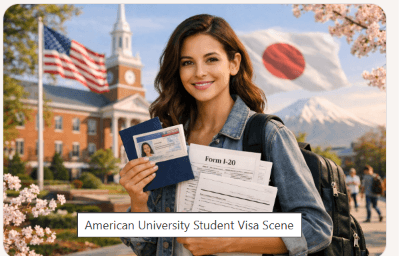
The United States remains one of the world's most popular destinations for higher education. Every year, thousands of international students choose to study at American universities because of their academic excellence, research opportunities, and global career prospects.
If you plan to begin your studies in the United States in 2026, obtaining an F-1 Student Visa is one of the most important steps before you travel.
This guide explains the complete US F-1 Student Visa application process in simple language. You'll learn about eligibility, required documents, the I-20 form, SEVIS fee, DS-160 application, visa interview, and common reasons for visa refusal.
What is a US F-1 Student Visa?
The F-1 Visa is a non-immigrant visa that allows international students to study full-time at accredited colleges, universities, language schools, and other approved educational institutions in the United States.
Students must maintain full-time enrollment and comply with US immigration regulations throughout their studies. For official guidance, visit EducationUSA — the U.S. government's resource for international students.
Who Needs an F-1 Student Visa?
You generally need an F-1 Student Visa if:
- You are not a US citizen or permanent resident.
- You have received admission to a SEVP-approved educational institution.
- You plan to study full-time.
- You can demonstrate sufficient financial resources.
- You intend to return to your home country after completing your studies.
Eligibility Requirements
To qualify for an F-1 Student Visa, applicants typically need:
- A valid passport
- Admission from a SEVP-certified school
- Form I-20 issued by the institution
- Proof of financial support
- Completed DS-160 application
- SEVIS fee payment receipt
- Visa appointment confirmation
- Passport-size photograph
Required Documents
Prepare the following before your visa interview:
- Valid passport
- Form I-20
- DS-160 confirmation page
- SEVIS fee receipt (Form I-901)
- Visa appointment confirmation
- Passport-size photograph
- University admission letter
- Academic transcripts
- Degree certificates
- Standardized test scores (if applicable)
- English language test results (IELTS, TOEFL, etc., if required)
- Bank statements
- Scholarship letter (if applicable)
- Sponsor's financial documents
Always confirm the latest checklist with your local U.S. Embassy or Consulate and the U.S. Department of State student visa page.
What is Form I-20?
Form I-20 is an official document issued by your US educational institution after admission.
It confirms that:
- You have been accepted.
- The institution is certified to enroll international students.
- You meet the academic requirements.
- Your estimated education costs are listed.
You must present the I-20 during your visa interview and carry it when entering the United States. Only schools certified under the Student and Exchange Visitor Program (SEVP) can issue valid I-20 forms.
What is the SEVIS Fee?
The Student and Exchange Visitor Information System (SEVIS) fee supports the administration of international student records.
Applicants generally need to:
- Pay the SEVIS I-901 fee before scheduling the visa interview.
- Keep the payment receipt.
- Present the receipt during the interview if requested.
Pay through the official portal at FMJfee.com (I-901 SEVIS Fee).
What is Form DS-160?
The DS-160 is the online non-immigrant visa application form required for most US visa categories, including the F-1 Student Visa.
Applicants should complete the form carefully and ensure all information matches their supporting documents. Access the official form at CEAC — DS-160 Online Application.
Step-by-Step US F-1 Visa Application Process
Step 1: Receive University Admission
Apply to a SEVP-approved US institution and obtain your admission letter. Explore our guide on how to get a fully funded scholarship to help finance your studies.
Step 2: Receive Form I-20
After accepting your admission, your university will issue Form I-20. Review the information carefully and sign the document where required.
Step 3: Pay the SEVIS Fee
Pay the required SEVIS I-901 fee through the official payment system and save your receipt.
Step 4: Complete Form DS-160
Fill out the DS-160 online application accurately. Upload your photo if required and print the confirmation page.
Step 5: Pay the Visa Application Fee
Pay the applicable visa fee according to the instructions provided by the US Embassy or Consulate in your country.
Step 6: Schedule Your Visa Interview
Book an appointment at the nearest US Embassy or Consulate. Availability varies by location, so schedule as early as possible.
Step 7: Attend the Interview
Bring all required documents and answer the consular officer's questions honestly. Typical interview topics include:
- Why did you choose this university?
- Why do you want to study in the USA?
- Who is funding your education?
- What are your plans after graduation?
Prepare a strong statement of purpose (SOP) and motivation letter to articulate your goals clearly.
Step 8: Receive Your Visa
If approved, your passport will be returned with the F-1 visa. Review the visa details before making travel arrangements.
Visa Interview Tips
To improve your chances of approval:
- Answer questions confidently and honestly.
- Be familiar with your chosen university and program.
- Explain your academic and career goals clearly.
- Organize your documents neatly.
- Dress professionally and arrive on time.
A well-structured scholarship essay can help you practice presenting your academic story concisely.
Financial Requirements
Applicants should demonstrate sufficient funds to cover:
- Tuition fees
- Accommodation
- Food
- Transportation
- Health insurance
- Personal expenses
Financial proof may include:
- Personal bank statements
- Parent or sponsor bank statements
- Scholarship award letters
- Education loan approval documents
Processing Time
Visa processing times vary depending on the embassy, season, and individual circumstances. It is advisable to apply well before your program start date.
After Receiving Your Visa
Before traveling to the United States:
- Check the visa validity.
- Review your Form I-20.
- Keep important documents in your carry-on luggage.
- Follow the entry instructions provided by your institution.
Upon arrival, complete the required immigration procedures and attend your university's orientation. Learn about maintaining F-1 status at Study in the States.
Common Reasons for Visa Refusal
Some common reasons include:
- Incomplete documentation
- Insufficient financial evidence
- Inconsistent interview responses
- Failure to demonstrate genuine study intentions
- Missing or incorrect forms
Careful preparation can help reduce the likelihood of delays or refusal.
Frequently Asked Questions
Can I work while studying on an F-1 Visa?
Students may be eligible for certain on-campus employment opportunities and other authorized work options under US immigration regulations. Always follow the rules applicable to your visa status.
Is the SEVIS fee mandatory?
Yes. Most F-1 visa applicants are required to pay the SEVIS I-901 fee before their interview.
What happens if my visa is refused?
The consular officer will explain the reason for the decision. You may be able to reapply after addressing the issues identified.
Can my family accompany me?
Eligible family members may apply for the appropriate dependent visa category, subject to US immigration rules.
When should I apply?
Start your application as soon as you receive your Form I-20 to allow enough time for processing and travel arrangements.
Final Thoughts
The US F-1 Student Visa process may seem detailed, but careful planning can make it much easier. Prepare your documents early, understand each step, and follow the official guidance from your educational institution and the US Embassy or Consulate.
A well-prepared application will help you begin your academic journey in the United States with confidence.