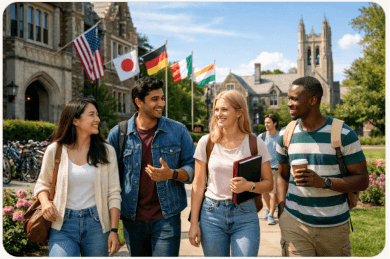
The United States welcomes thousands of international exchange visitors every year through the J-1 Exchange Visitor Program. Whether you're participating in an internship, research project, teaching program, cultural exchange, medical training, or university exchange, the J-1 Visa allows you to gain valuable international experience while living in the United States.
Unlike the F-1 Student Visa, which is designed for full-time academic study, the J-1 Visa is specifically intended for approved exchange programs sponsored by organizations recognized by the U.S. Department of State.
This guide explains the complete US J-1 Visa application process for 2026 in simple language. You'll learn about eligibility, the DS-2019 form, SEVIS fee, visa interview, required documents, and helpful tips to prepare your application.
What is a US J-1 Visa?
The J-1 Visa is a non-immigrant exchange visitor visa issued to individuals who participate in educational and cultural exchange programs approved by the U.S. Department of State.
The goal of the program is to promote international understanding through academic, professional, and cultural exchange. For official information, visit the U.S. Department of State Exchange Visitor Program.
Who Can Apply?
The J-1 Visa is available for many types of participants, including:
- University Students
- Exchange Students
- Research Scholars
- Professors
- Teachers
- Interns
- Trainees
- Physicians
- Au Pairs
- Camp Counselors
- Government Visitors
- Summer Work Travel Participants
J-1 Visa Categories
Common J-1 exchange programs include:
- University Exchange Programs
- Research Fellowships
- Internship Programs
- Professional Training
- Teaching Exchange
- Medical Residency Programs
- Summer Work & Travel
- Cultural Exchange Programs
Eligibility Requirements
Applicants generally need:
- A valid passport
- Acceptance into an approved exchange program
- Form DS-2019
- Financial support
- English language proficiency (if required)
- Medical insurance meeting program requirements
- A sponsoring organization approved by the U.S. Department of State
Required Documents
Prepare the following documents:
- Passport
- DS-2019 Form
- DS-160 Confirmation Page
- SEVIS Fee Receipt
- Visa Appointment Confirmation
- Passport-size Photograph
- Invitation or Acceptance Letter
- Financial Documents
- Academic Certificates (if applicable)
- Sponsor Documents
- Health Insurance Information
Confirm the latest checklist with your local U.S. Embassy or Consulate and the U.S. Department of State J visa information page.
What is Form DS-2019?
Form DS-2019, officially called the Certificate of Eligibility for Exchange Visitor Status, is one of the most important documents required for a J-1 Visa.
Your sponsoring organization prepares and issues this form after accepting you into an exchange program.
Without Form DS-2019, you cannot apply for a J-1 Visa.
What is the SEVIS Fee?
Most J-1 applicants are required to pay the SEVIS I-901 Fee before attending their visa interview.
Always keep the payment receipt, as it may be requested during your application process. Pay through the official portal at FMJfee.com (I-901 SEVIS Fee).
Step-by-Step J-1 Visa Application Process
Step 1: Receive Program Acceptance
Receive acceptance into an approved exchange program. Explore fully funded scholarship opportunities that may support your exchange.
Step 2: Receive Form DS-2019
Your sponsor issues Form DS-2019 after accepting you into the program.
Step 3: Pay the SEVIS I-901 Fee
Pay the required SEVIS fee and save your receipt.
Step 4: Complete the DS-160 Application
Fill out the DS-160 online visa application accurately and print the confirmation page.
Step 5: Pay the Visa Application Fee
Pay the applicable visa fee according to embassy instructions.
Step 6: Schedule Your Visa Interview
Book an appointment at the nearest U.S. Embassy or Consulate as early as possible.
Step 7: Prepare Supporting Documents
Gather all required documents, including financial proof and program acceptance materials. A strong statement of purpose (SOP) and motivation letter can help you articulate your exchange goals.
Step 8: Attend the Visa Interview
Bring all documents and answer the consular officer's questions honestly and confidently.
Step 9: Receive Your Visa
If approved, your passport will be returned with the J-1 visa stamp.
Step 10: Travel and Report to Your Sponsor
Travel to the United States and report to your sponsoring organization according to program instructions.
Visa Interview Tips
- Answer questions honestly and confidently.
- Be familiar with your exchange program, sponsor, and host institution.
- Explain how the program supports your academic or professional goals.
- Organize your documents in a clear folder.
- Dress professionally and arrive on time.
If you're applying for international programs, see our UN cover letter guide and UN resume guide for professional application tips.
Processing Time
Visa processing times vary depending on the embassy, season, and individual circumstances. Apply well before your program start date to allow enough time for interview scheduling and passport return.
Financial Requirements
Applicants should demonstrate they have enough financial support to cover:
- Living expenses
- Accommodation
- Food
- Transportation
- Personal expenses
Financial support may come from:
- Sponsoring organization
- Scholarship
- Government funding
- Personal savings
- Family sponsor
Health Insurance
Most J-1 participants must maintain health insurance that meets the requirements set by the U.S. Department of State and their program sponsor. Confirm coverage details with your sponsor before departure.
Two-Year Home Residency Rule
Some J-1 Visa holders may be subject to the two-year home-country physical presence requirement under U.S. immigration law. If this rule applies, they generally must return to their home country for two years before becoming eligible for certain U.S. visas or immigration benefits, unless they obtain a waiver.
Whether this rule applies depends on factors such as the exchange program, funding source, and skills list. Check your DS-2019 and visa documentation or consult your program sponsor for guidance.
Frequently Asked Questions
Can I work on a J-1 Visa?
Employment depends on your approved exchange program and sponsor authorization. You should only engage in activities permitted under your J-1 category.
Is the J-1 Visa different from the F-1 Visa?
Yes. The J-1 Visa is designed for exchange visitor programs, while the F-1 Visa is intended for full-time academic study.
Can my spouse accompany me?
Eligible spouses and children may apply for J-2 dependent visas, subject to applicable requirements.
Can I extend my J-1 Visa?
Some exchange programs allow extensions if approved by the sponsoring organization and permitted under program rules.
Final Thoughts
The US J-1 Visa opens the door to valuable educational, professional, and cultural exchange opportunities. By understanding the requirements, preparing the correct documents, and following the official application process, you can improve your chances of a successful visa application.
Always rely on the guidance provided by your sponsoring organization and the official U.S. government resources to ensure your application is complete and accurate.